
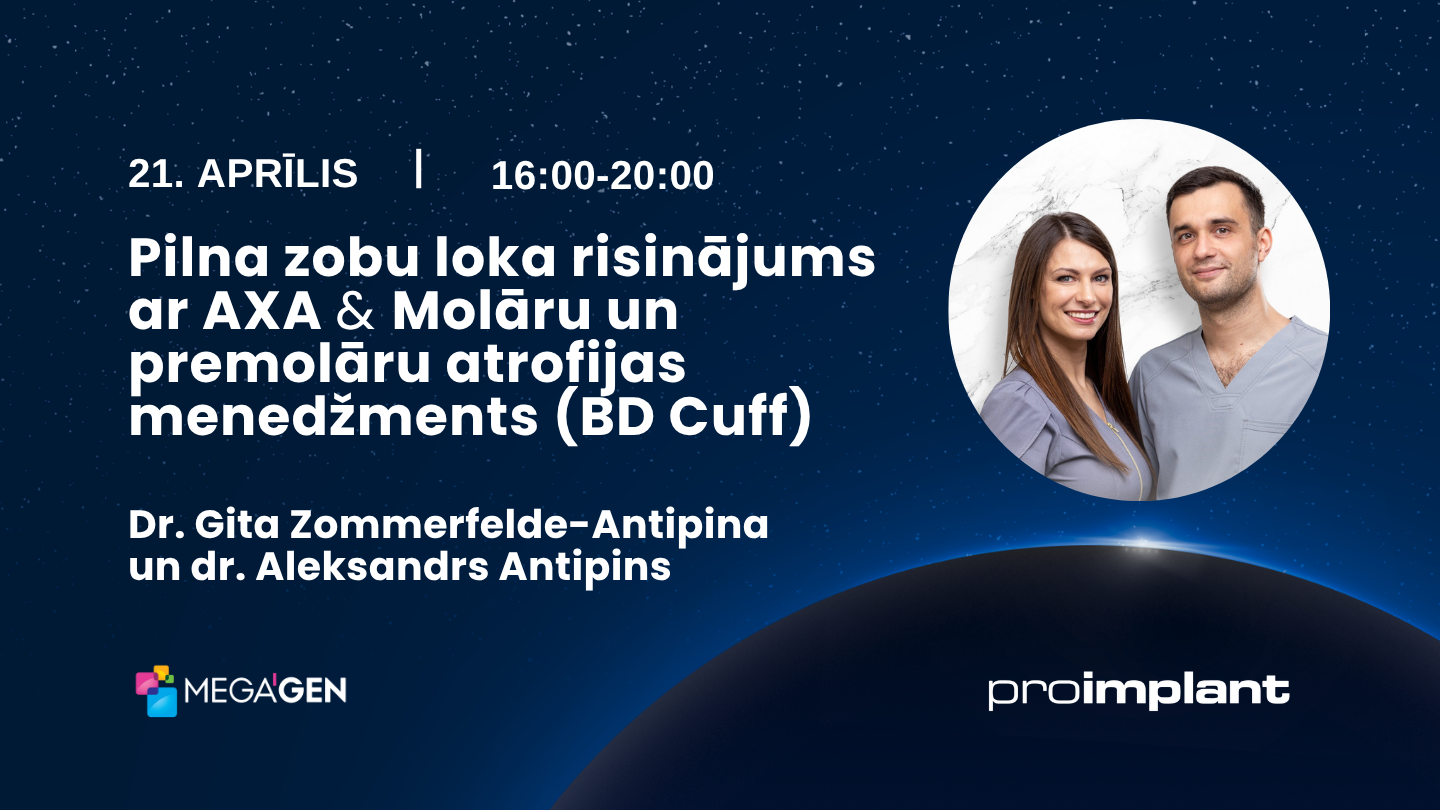
Pilna zobu loka risinājums ar AXA & Molāru un premolāru atrofijas menedžments (BD Cuff)
Dr. Gita Zommerfelde-Antipina un dr. Aleksandrs Antipins
Apmācību dalībnieki gūs zināšanas par diviem protezēšanas un implantoloģijas risinājumiem:
1. Kā izmantot jauno AXA Multi-Unit sistēmu
Pirmajā daļā dalībnieki iepazīs AXA sistēmas priekšrocības salīdzinājumā ar iepriekš pieejamajām MUA (multi unit abatment) sistēmām. Tiks aplūkoti ieguvumi ķirurģiskajā posmā, lai nodrošinātu pareizu kroņa saskares profilu protezēšanai un atbilstošu abatmentu pozicionēšanu.
Dalībnieki iepazīsies arī ar citiem inovatīviem risinājumiem, piemēram, Click-on pagaidu abatmentu, kas ievērojami vienkāršo un paātrina protezēšanas posmu. Tiks skaidrots, kāpēc noteiktās situācijās ir ieteicams izvairīties no MUA cilindra / titāna bāzes izmantošanas. Apmācībā tiks apskatīta arī digitālā darbplūsma, tostarp kad un kāpēc izmantot horizontālo scanbody un reverse scanbody.
Apmācību mērķis ir sniegt dalībniekiem zināšanas, kas nepieciešamas veiksmīgam darbam ar AXA sistēmu.
2. BD Cuff sistēma aizmugurējo zobu rajonā
Otrajā apmācību daļā dalībnieki apgūs risinājumu alveolārā kaula kores saglabāšanai sānu un aizmugurējo zobu zonā bez GBR (vadītas kaula reģenerācijas), izmantojot BD Cuff implantu.
Dažos specifiskos gadījumos kaula augmentācija sānu un aizmugurējo zobu bukālajā zonā nav prognozējama vai arī iepriekš ir bijusi neveiksmīga. Šādās indikācijās var apsvērt jaunu risinājumu — BD Cuff implantu. BD Cuff implanta priekšrocība ir tā, ka tas aizsargā alveolārā kaula kori un mīksto audu robežzonu, kas palīdz novērst vienu no biežākajām ilgtermiņa implantoloģijas problēmām — kaula zudumu un periimplantītu implanta kakliņa zonā.
Dalībnieki uzzinās, kādās situācijās BD Cuff implants var būt piemērotāka izvēle nekā bukālā kaula rekonstrukcija. Noteiktos gadījumos šī pieeja ļauj sasniegt stabilu rezultātu, vienlaikus pasargājot pacientu no otrā ķirurģiskā posma un ar to saistītā diskomforta. Tiks aplūkotas BD Cuff sistēmas specifiskās īpašības un faktori, kas jāņem vērā tās lietošanā.
Pēc lekcijas notiks praktiskā hands-on nodarbība uz kaula modeļa, kuras laikā tiks ievietoti 6 implanti un 6 AXA abatmenti. Dalībnieki izmēģinās implantu ievietošanu (BlueDiamond, BD Cuff, ARi) dažādos kaula apstākļos, lai sasniegtu pietiekamu primāro stabilitāti, kā arī apgūs, kā — atšķirībā no konvencionālajiem MUA risinājumiem — panākt visu AXA abatmentu pareizu paralēlu pozicionēšanu, izmantojot Angle Guide Tool.Šāda pieeja vēlāk atvieglo protezēšanas procedūras un palīdz nodrošināt labāku estētisko un funkcionālo rezultātu.
INFO
DATUMS: 21. aprīlis
LAIKS: 16:00 - 20:00 (lekcija + praktiskā hands-on nodarbība)
CENA (ieskaitot PVN): 150 EUR
VIETA: Proimplant apmācību centrs (Bolero centrs, Lielirbes iela 27)
Informējam, ka pasākuma laikā tiks veikta fotografēšana un filmēšana. Iegūtie vizuālie materiāli var tikt izmantoti Proimplant Latvia un Proimplant OÜ publicitātes, komunikācijas un mārketinga nolūkos, tostarp sociālajos medijos, tīmekļa vietnēs un e-pasta komunikācijā.